 All Treks
Everest Base Camp Trek
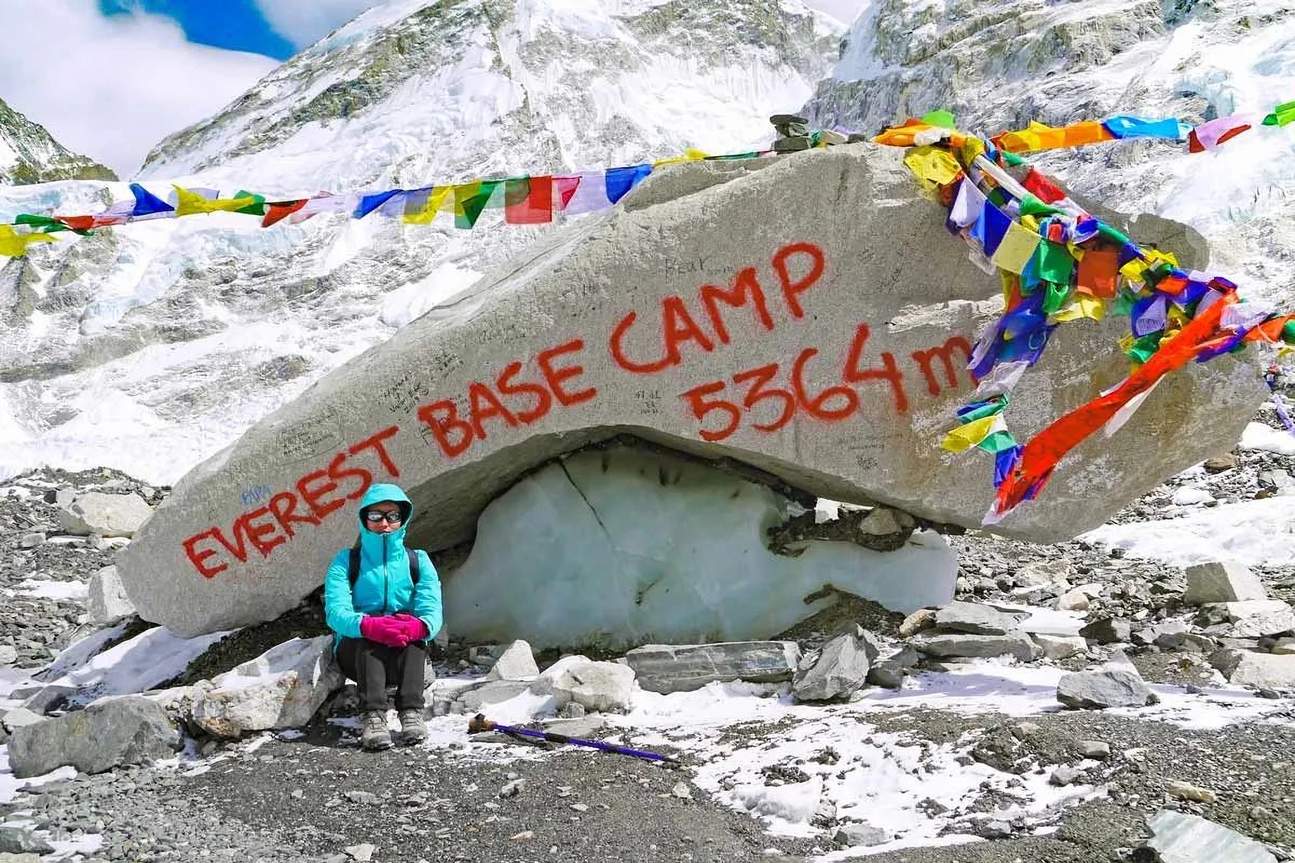
The world's most iconic high-altitude trek. From the Sherpa villages of the Khumbu valley to the foot of Everest at 5,364m — 14 days of extraordinary landscapes, living Buddhist culture, and personal achievement that most trekkers call the defining experience of their lives.
The world's most iconic high-altitude trek. From the Sherpa villages of the Khumbu valley to the foot of Everest at 5,364m — 14 days of extraordinary landscapes, living Buddhist culture, and personal achievement that most trekkers call the defining experience of their lives.
The Everest Base Camp Trek traces the same route used by the world’s greatest mountaineers on their way to the summit of Chomolungma — the 8,849-metre colossus the Sherpa people call Mother of the Universe. Beginning with a legendary 30-minute mountain flight from Kathmandu to Lukla’s cliff-edge airstrip, the trail climbs through the deep gorge of the Dudh Koshi River, past ancient monasteries and prayer-flag-draped suspension bridges, into the heart of the Khumbu region — home to the Sherpa community whose high-altitude expertise and extraordinary warmth have defined Himalayan trekking for generations.
The route passes through Namche Bazaar, the bustling hub of the Khumbu at 3,440m, where a full acclimatisation day prepares you for the altitude ahead. Above Namche, the landscape transforms dramatically: yak pastures and rhododendron forests give way to glacial moraine and a horizon ruled entirely by the white peaks of Lhotse, Nuptse, Pumori and the impossibly elegant pyramid of Ama Dablam. The sacred monastery of Tengboche, perched on a ridge at 3,860m with Everest framed directly behind it, is one of the great sights of the trekking world. Beyond Dingboche, all traces of lowland Nepal fall away — this is the high Khumbu, stark and silent and completely unlike anywhere else on earth.
Standing at Everest Base Camp (5,364m) is a moment that stays with you forever. In expedition season the plateau is alive with coloured tents and the deep rumble of seracs calving from the Khumbu Icefall — a tortured river of ancient ice that pours from the Western Cwm 600 metres above. The following pre-dawn climb to Kala Patthar (5,545m) delivers the finest unobstructed view of Everest’s full summit pyramid on the planet, catching fire in the first light of day while the valleys below are still dark.
Our 14-day itinerary is built around two dedicated acclimatisation days, a principle of ascending slowly and descending for overnight stops wherever possible, and a guide who carries a pulse oximeter and monitors blood-oxygen levels every morning. You will be challenged. You will be slowed by altitude in ways that fitness alone cannot prevent. And you will arrive at the foot of the highest mountain on earth having earned every step. Most trekkers describe this journey not merely as the best trek of their lives, but as the experience that reset their sense of what is possible.
What's Included
Included
- Return Kathmandu–Lukla–Kathmandu mountain flights
- TIMS card, Sagarmatha National Park permit & Khumbu Rural Municipality entry fee
- Experienced, licensed English-speaking trekking guide throughout
- One strong porter per two trekkers (carries up to 20 kg of group gear)
- Twin-sharing teahouse accommodation throughout the trek
- All meals on trek: breakfast, lunch & dinner (30 meals total)
- TravelNepal duffel bag, trek map & welcome kit
- Pulse oximeter monitoring and first-aid kit with daily altitude checks
- Emergency evacuation coordination (helicopter cost covered by your travel insurance)
- All government taxes and trekking agency service fees
Not Included
- International flights to/from Kathmandu
- Nepal entry visa (approx. USD 50 for 30 days — available on arrival at TIA)
- Travel insurance (mandatory — must cover helicopter rescue above 5,000m)
- Personal trekking gear (sleeping bag, down jacket, poles — rental available in Kathmandu)
- Hot showers and device charging at teahouses (NPR 200–500 per use)
- Alcoholic beverages, bottled water and snacks between meals
- Personal expenses: tips, souvenirs and internet access
- Guide and porter gratuities (customary: USD 15–20/day guide · USD 8–10/day porter)
- Costs arising from weather delays, early descent or emergency itinerary changes
Itinerary
Know Before You Go
- • You must be able to walk 6–8 hours per day on steep, uneven terrain for 14 consecutive days — prior hill-walking experience is strongly advised
- • Travel insurance is mandatory and must explicitly cover helicopter rescue above 5,000m — verify the fine print before you fly to Nepal
- • There are no ATMs above Namche Bazaar — withdraw sufficient Nepali Rupees in Kathmandu before the trek departs
- • Altitude sickness (AMS) can affect anyone regardless of fitness — never ascend with headache, persistent nausea or confusion
- • Temperatures at Base Camp and on Kala Patthar can drop below −15°C at night — a sleeping bag rated to at least −20°C is essential
- • Best trekking seasons are March–May (spring rhododendrons, stable weather) and September–November (crisp post-monsoon clarity)
- • Wi-Fi exists at teahouses above Namche but is slow — download offline maps (Maps.me / Gaia GPS) before leaving Kathmandu
- • Your guide has final authority on pace and all safety decisions — their judgement has kept thousands of trekkers safe on this route
- • Bring a reusable water bottle and purification tablets; reducing single-use plastic is a community priority in the Khumbu
- • Always ask permission before photographing local people, especially at monasteries and during religious ceremonies