The peaceful hill town of Nagarkot lies around 30km east of Kathmandu and makes a lovely break from the intensity of Nepal’s capital. It’s best known for its relaxing atmosphere and incredible mountain views – if you get a clear day, then you can even see Everest peeking out in the distance.
It’s a relatively small place, and whilst you wouldn’t spend an entire holiday here, there’s plenty to do for a couple of days or even just visiting on a day trip.
How to get to Nagarkot from Kathmandu
From Kathmandu, the road leads east and into the hills. Once you’ve made it out of the city traffic, the journey should take around 1.5 hours along winding roads of varying quality.
By Local bus:If you’re on a budget or just like the experience of local travel, then you can head to Bhaktapur Bus Stop in Kathmandu, a little east of Ratna Park. The public bus doesn’t run directly to Nagarkot, so you’ll need to jump off in Bhaktapur and catch a bus from there.
The journey should take around 3 hours in total, and the bus driver and locals can help you out if you get confused!
By Car: Slightly more expensive but much easier, your other option is to take a taxi or private transfer. If you need a taxi, then you can ask your hotel to call one for you, or head to the Thamel area and try your luck at haggling. You should expect to pay between 2000 and 3000 NPR for a one-way journey.
Alternatively, you can arrange a private transfer and accommodation with a reputable travel company like our partners at Royal Mountain Travel.
7 Great things to do in Nagarkot
Nagarkot is a serene and relaxing place, so you may choose to just, well, relax! If so, then there are views to enjoy and plenty of nice little restaurants to visit. If you’re looking to explore some more, then here are our favourite things to do in Nagarkot.
1. Hike to the Nagarkot View tower (and maybe see Everest…)
The view tower sits just outside of town and is a relatively easy hike up the main road, achievable for most people. Once you reach the tower you’ll have a panoramic view of your surroundings, including famous mountains such as Ganesh Himal, Langtang Lirung and Dorje Lakpa. You can also get a distant view of Mount Everest, but only on a cloudless day.
Make sure you take enough cash with you, as there’s a 350NPR fee for non-Nepali visitors.
2. Hike the panoramic trail
There are a variety of longer hikes possible around Nagarkot, with the most popular being the Panoramic Trail – a scenic 12km loop around the area which includes the Nagarkot Nature Trail and the Tamang Village Walk.
You can either enlist a local guide or hike independently. Information about the route is available locally.
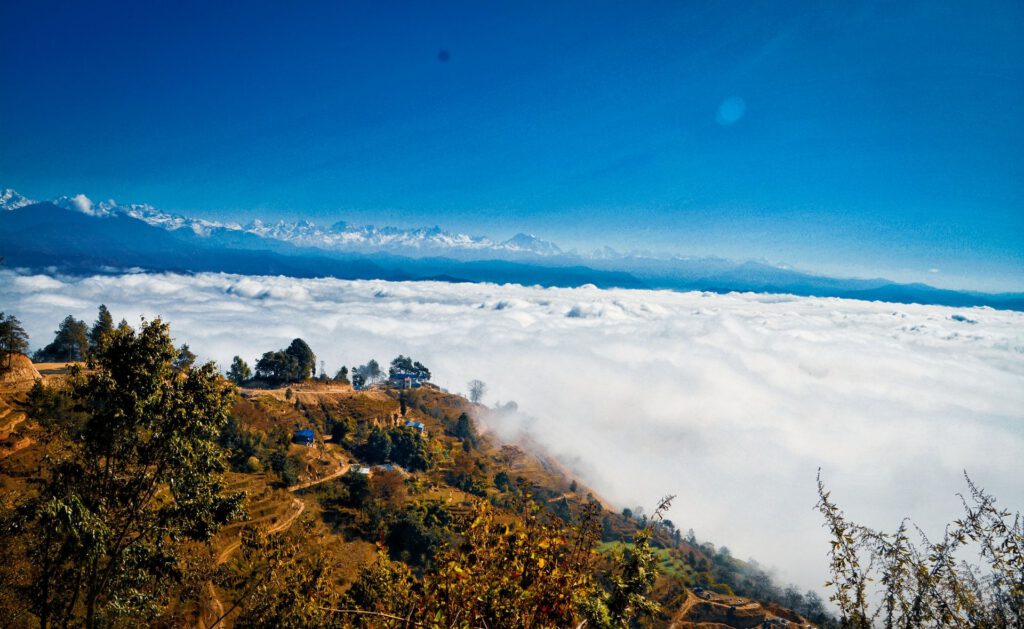
Looking over the clouds in Nagarkot (photo cr. Sudeep Timalsina)
3. Plant a tree at the Buddha Peace Park
A pleasant walk of around an hour from Nagarkot brings you to the Buddha Peace Park – a large golden Buddha statue surrounded by an open park.
It looks over the valley and is a lovely spot to enjoy some peace.
For a small fee (around 350NPR), they will help you plant a tree to commemorate a lost loved one, bringing a meaningful moment to your time in Nagarkot.
4. Catch the sunrise
Even if you’re not a morning person, it’s worth getting up early to watch a fantastic sunrise – the surroundings will doubtless make it one of the more memorable ones you’ll have seen!
You’ll need to find a good spot to get the best view, and if you’re on the wrong side of the hill, then you’ll see very little. During high season, many hotels will offer organised trips, but otherwise you can ask locally, and it’ll often just be a short walk.
Country Villa is known to be a good spot, and they’re usually fine with sunrise visitors so long as you buy a coffee or snack.
5. Go mountain Biking
The area around Nagarkot looks like it was created specifically for biking, with rocky trails winding through the spectacular countryside. In particular, the route known as “the loop” is very popular. During high season, mountain bikes will be available to rent locally, although this may be more difficult out of season.
6. Try Paragliding
On a clear day, there’s really no better way to see this area than from the sky. There are a few local providers who run paragliding experiences during the high season, if you’re brave enough!
7. Enjoy local life at Nagarkot Community Homestay
If you want to see a truly authentic side of Nagarkot, then spending a night or two at the Community Homestay is the perfect solution. Located just outside town, this small and welcoming community gives you the chance to stay with a local family, enjoying home cooking and experiencing village life. You can even get involved in daily chores and organise trips to the nearby waterfall or hikes through the countryside.
After a day of adventure in Nagarkot, you might find it tempting to unwind with some light entertainment. This is where online casino reviews come in handy, as they offer insight into the various online gaming platforms where you can have some fun. These reports provide detailed reviews, information on the latest games, and tips on how to play responsibly, ensuring a safe and enjoyable experience.
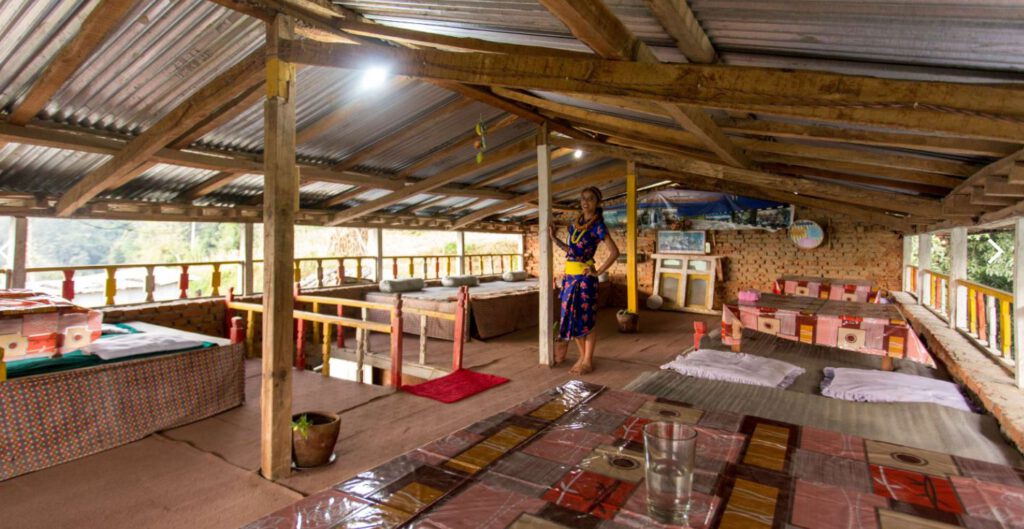
The dining area at Nagarkot Community Homestay.
All in all, a day or two in Nagarkot is well worth planning into your itinerary. It’s a lovely little respite from the busy city where you can truly relax and enjoy your surroundings.
Nepal has always attracted intrepid trekkers and travellers wanting to explore the unique culture and spectacular scenery, but in recent years, a more modern form of tourism has started to bring in visitors from all over the world – adventure sports.
The infrastructure for Nepal adventure activities has improved rapidly to meet this demand, and there are now some top-class facilities across the country.
What makes Nepal so good for adrenaline junkies?
Nepal’s landscapes are some of the most dramatic in the world, with 8 of the 14 highest mountains on the planet, sweeping valleys, vast lakes, and thunderous rivers. It’s almost like it was made with adventure sports in mind!
Whether you’re paragliding beside the Himalayas, scaling a mountain peak, or rafting on fierce rapids, the scenery around you is what makes it that little bit more special.
Nepal is also a very outdoor nation, and the people have spent centuries exploring and adapting to their often challenging environment. This means a plethora of expert guides and remote spots to give you the ultimate outdoor experience.
Safety standards are also higher than in many other parts of the world, both in terms of equipment and training, so you’ll have some peace of mind whilst you’re getting your adrenaline hit.
What adventure sports can I do in Nepal?
If there’s a demand for it, then the chances are that some enterprising Nepali has made it happen!
Here are some of the most popular activities available in Nepal;
Paragliding and Ultralight flights
Experiencing Nepal from the sky is unforgettable, with incredible views over the terrain stretching over the valleys and into the Himalayas.
Pokhara has become the centre for aerial activities, although there are other spots such as Bandipur where you can take to the air. Pokhara is situated by the shores of a large lake and next to the giant mountains of the Annapurna range, making it one of the most scenic places in the world for paragliding.
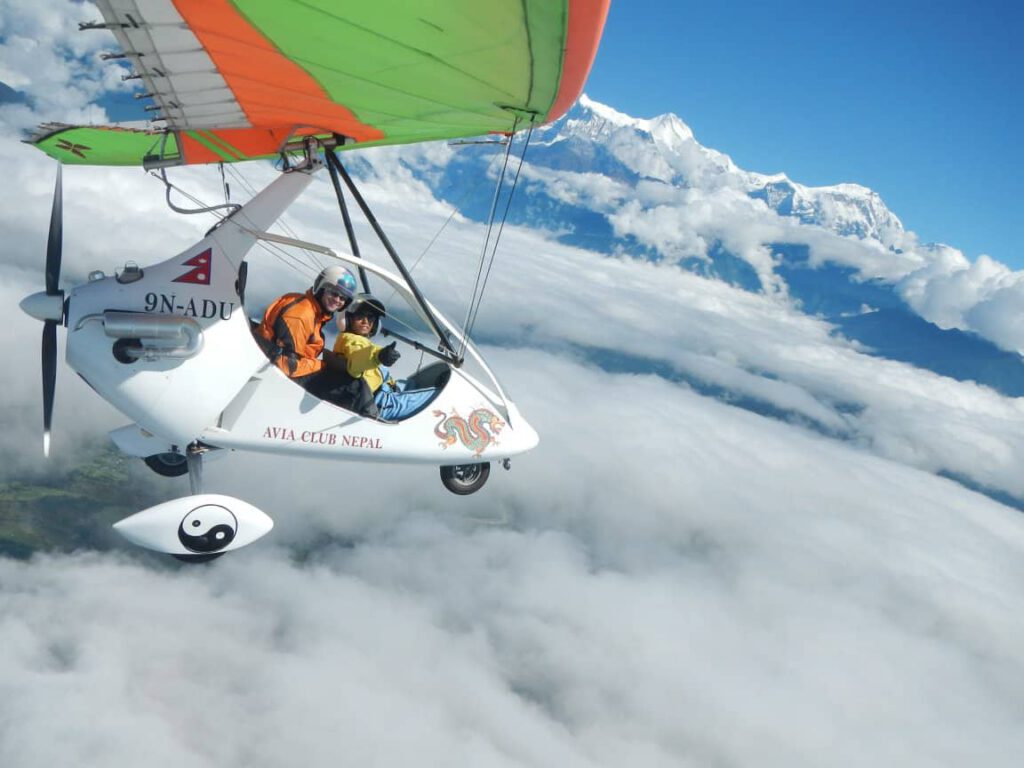
To get further into the mountains, however, you’ll need an engine. Ultralight planes are usually tiny 2-seaters with open cockpits, so you’ll feel the wind on your face and almost feel like you can touch the mountains (they don’t get quite that close though, don’t worry!). Various routes operate, mainly from Pokhara, so you can choose how long you want to be in the air and how deep into the Himalayas you want to explore.
Parahawking is something even more unusual, where you’ll paraglide in the company of a trained bird of prey, saved from injury or orphanage. The bird helps the pilot navigate to the best thermals in the area, and will even perch on your arm if commanded. It’s a surreal experience that you won’t forget in a hurry.
There are several operators in and around Pokhara, including Avia Club Nepal, who offer both paragliding and ultralight flights.
White-water rafting and kayaking
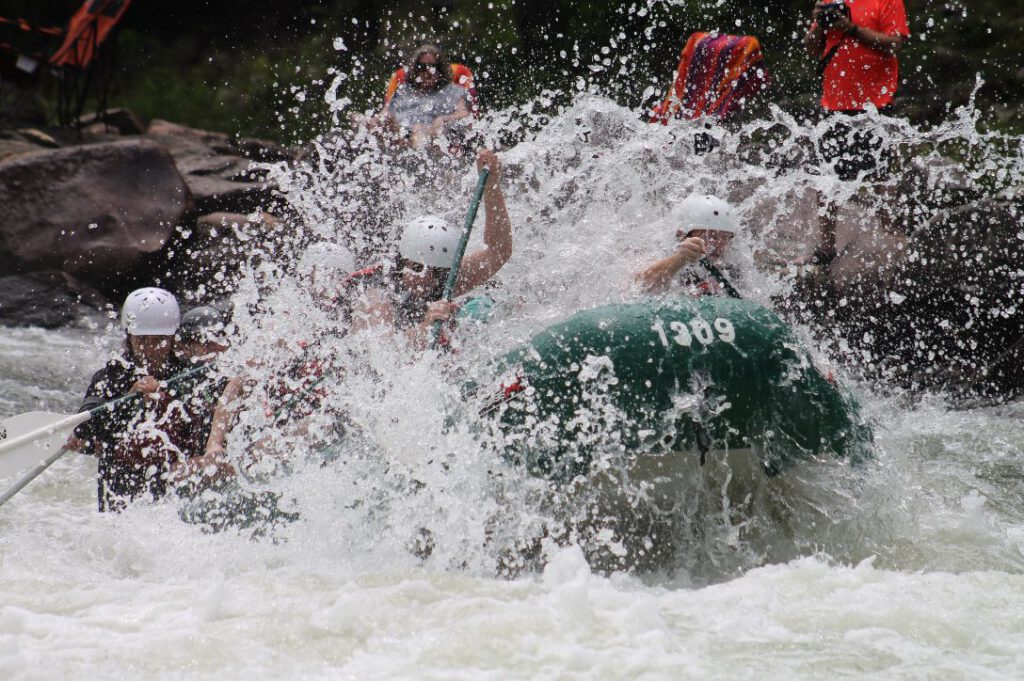
With everything from fun grade 2 and 3 rapids, right up to extreme challenges on raging river sections, Nepal offers some great opportunities for white-water rafting and kayaking. The rivers carve through the valleys and into the mountains, giving you a unique way to experience Nepal’s wilderness.
There are some famous multi-day routes you can take, such as the Karnali River or the Sun Kosi near the Tibetan border, or shorter day trips like the Trisuli River or Bhote Kosi.
The Last Resort is based a few hours from Kathmandu and offers professionally run rafting trips all across the country.
Skydiving and Bungee Jumping
If your idea of a thrill is free-falling at high speed, then Nepal has you covered. There are a few more spectacular landscapes to look down as you’re plummeting towards the ground, and several reputable companies operate trips throughout most of the year (weather dependent, of course).
Pokhara is a popular spot for skydiving, with its vast Phewa Lake and proximity to the Annapurna range providing an unforgettable view. Intrepid (and wealthy) skydivers can also take on the Everest Skydive – a once-a-year expedition to take on two skydives over the world’s highest mountain.
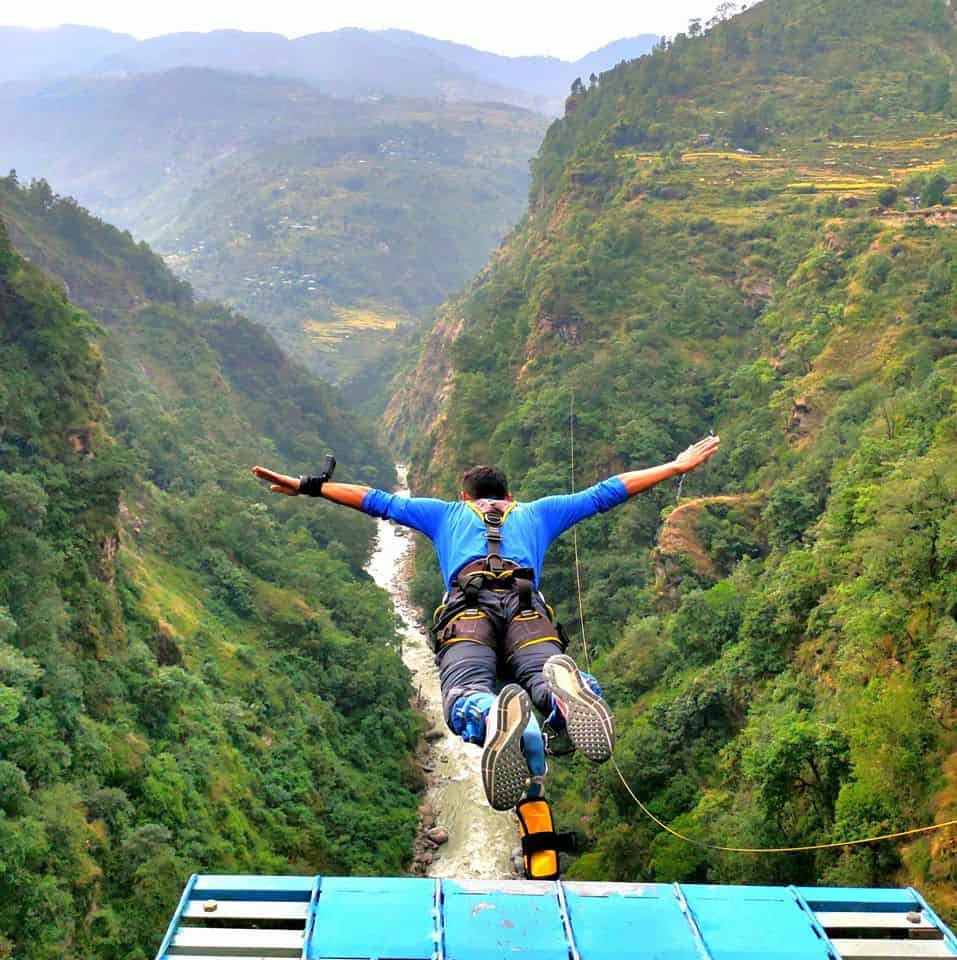
Nepal also offers a couple of high-quality bungee jumps and canyon swings, with a tower bungee at Hemja near Pokhara, and a wonderfully located bridge bungee at The Last Resort to the east of Kathmandu.
Mountaineering
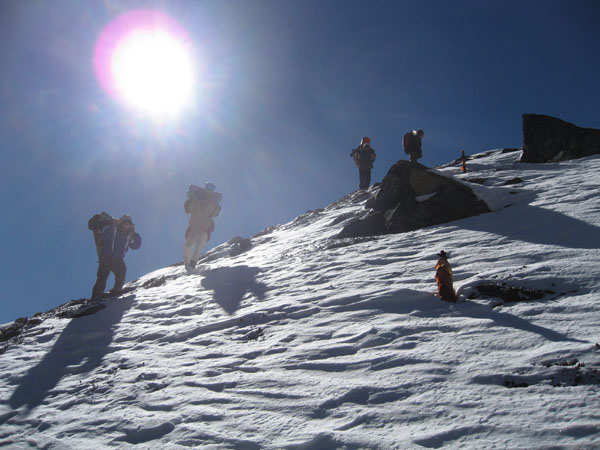
A different type of thrill, of course, but if reaching the summit of Mount Everest doesn’t thrill you, then nothing will! The Himalayas have long attracted explorers from all around the world, and with 8 of the highest 14 mountains on earth, Nepal is widely regarded as the mecca of mountaineering.
There are a huge number of different mountains and routes, each with its own challenges and rewards, so do your research and decide which is right for you. If it’s your first time, then we really recommend speaking to a professional local company before making any decisions. You can get in touch with our partners at Royal Mountain Travel if you’d like some recommendations and help arranging your itinerary.
Mountain Biking
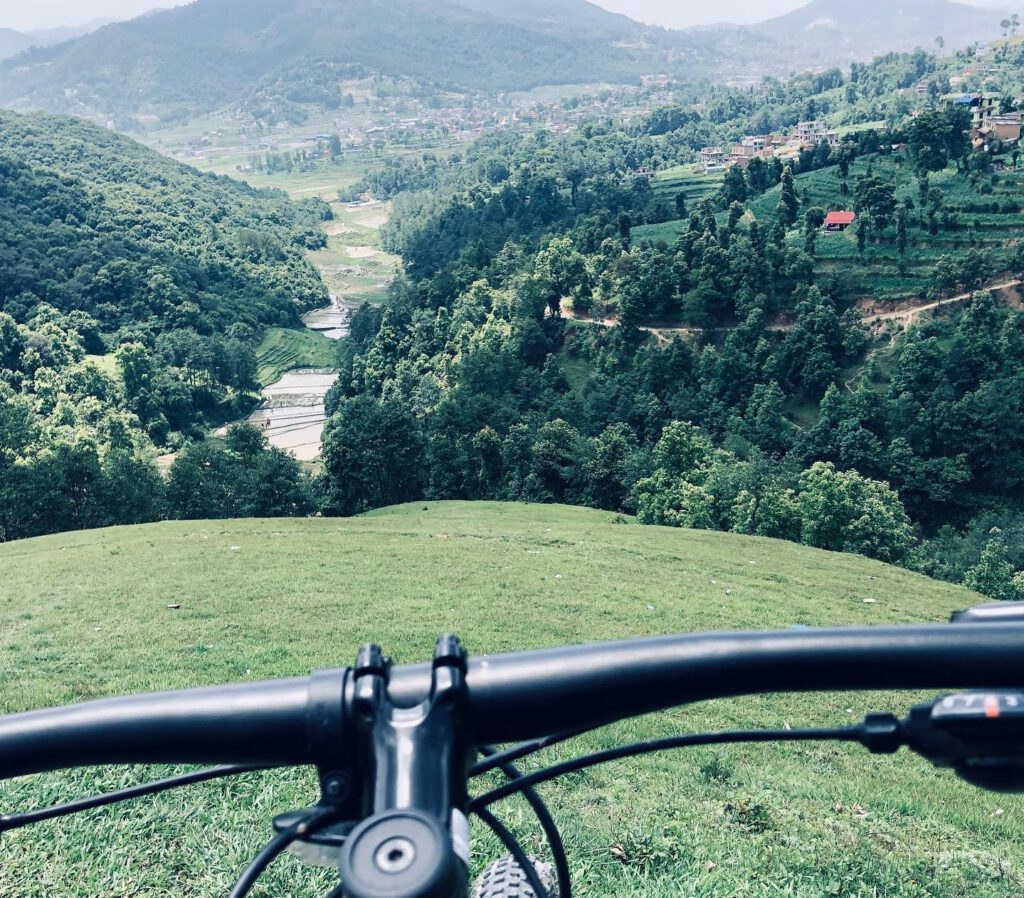
The rural tracks of Nepal are a mountain biker’s dream, and a great way to get away from the highways and see parts of the country that other tourists won’t. Around the Kathmandu Valley and further afield, you’ll find trails that take you to cultural sites and into remote areas.
Serious bikers often bring their own kit, but there are a few companies in Kathmandu who will hire out quality equipment, help you to plan your routes, and even run escorted tours and heli-biking. It’s always worth consulting a professional company before you set off – Nepal has wild terrain, so you need to know where you’re going and what to do if you have problems. You should also take the altitude and steepness into account, so make sure you have acclimatisation days and don’t take on more than you can handle.
For a gentler mountain biking experience, there are some good day trips suitable for most abilities, such as the community-run Panauti Bike Station, just a short drive from Kathmandu.
There are a bunch of other ways to get your kicks, too, with everything from quad biking to base jumping possible. If you need a little help planning your activities in Nepal, feel free to get in touch! Contact Us!
The question of when to go to Nepal doesn’t always have a simple answer, and although trekking conditions reach near-perfection at some points of the year, Nepal’s traditional ‘low seasons’ bring their own advantages and unique opportunities.
In short, there isn’t really a bad time to head to Nepal; it just depends on what you want to do on your vacation.
When are Nepal’s low seasons?
Nepal has two low seasons: the monsoon season (June to August) and the winter season (December to February). Both are prime travel times for summer breaks or Christmas vacations, and both offer varied experiences and benefits.
Aside from your costs generally being lower whilst you’re there, you’ll also find things less crowded and even more relaxed than usual. If you like your quiet time and the feeling of being a true explorer, then the low season might be the time for you.
Travelling in the low season brings a benefit to Nepal too, as ‘overtourism’ has taken its toll on the country’s environment. If Nepal’s tourist numbers are more evenly spread through the year, it is much easier to manage the impact. It also helps the Nepali people earn income more consistently throughout the year, which will be much needed as tourism gradually re-opens after the pandemic.
Best places to go in Nepal’s low seasons
The Terai region, in the southern part of Nepal, is a wet lowland area and is home to the famous Chitwan National Park. Nepal’s first national park, Chitwan’s jungle, is a sanctuary for one-horned rhinoceros, Bengal tigers, crocodiles, and a huge variety of rare birds, insects, and mammals.
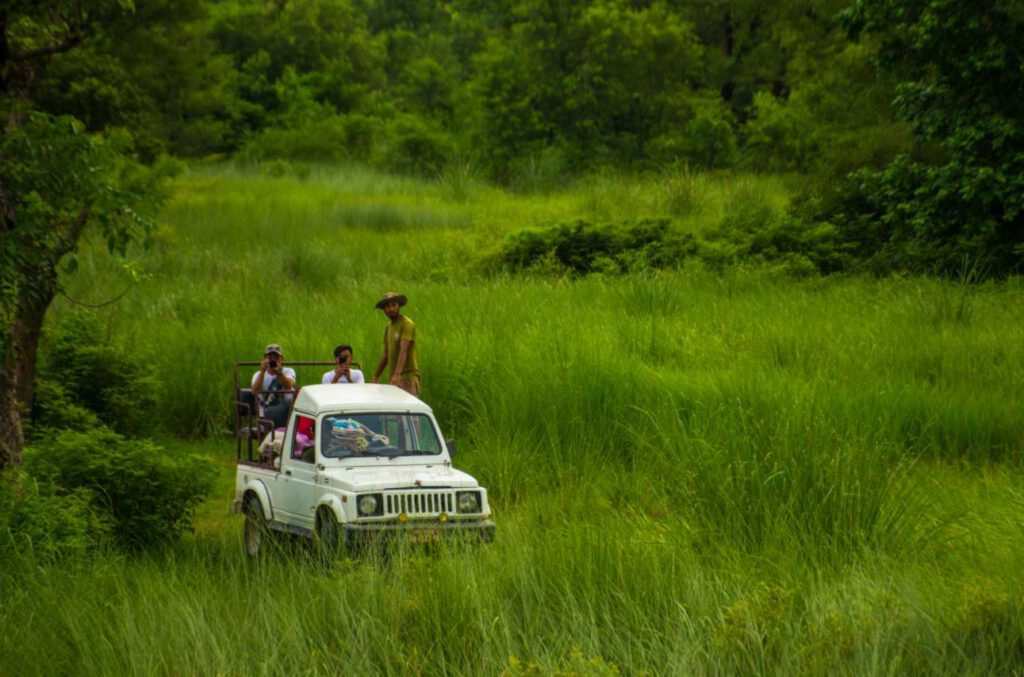
Wildlife safaris in the park can be far more enjoyable and less humid in the winter months. Plus, with fewer tourists, you’ll have the chance for an even more intimate wildlife experience.
Just a few hours south of Kathmandu, it’s easy to reach the Terai and include a Chitwan safari in your plans.
The Mustang district, once an independent kingdom near the Tibetan border, sits in a rain shadow, protected from monsoons by the high Himalayas. Because of its high altitude and the winds that blow up the Kali Gandaki river gorge (the deepest in the world), Mustang can get extremely cold in the winter. The summer monsoon months are the optimal time for a visit to this unique part of Nepal.
While the colorful three-day Tiji Festival often falls in May (dependent on the lunar calendar), travelers can explore the Forbidden Kingdom’s monasteries, meditation caves, and villages throughout the summer.
The easiest way to reach Lower Mustang is a short domestic flight to the gateway city of Jomsom, from either Kathmandu or Pokhara. If you’re brave enough and want to save some rupees, then the bumpy journey from Pokhara by road will take at least 8 hours by shared minibus or (preferably) private jeep.
Two of Nepal’s top attractions, Everest and Annapurna, can also be ideal destinations in the winter, when there are far fewer trekkers on the trails. The weather is less predictable at this time of year, so sticking to the lower elevation trekking routes is recommended, but the panoramic views of the great mountains will be just as jaw-dropping.
For lower costs, less environmental impact, and that feeling of isolation in the mountains, trekking in the winter months can be a truly memorable experience.
The Mardi Himal Trek is a lesser-traveled, four or five-day route in the Annapurna range, whilst the Everest Panorama Trek is a beautiful seven-day route through the Khumbu region with views of some of the Himalaya’s most impressive peaks, including Everest, Lhotse, Nuptse, and Ama Dablam.
You can visit Nepal’s dynamic cities, like Kathmandu or Pokhara, at any time of year, but the low seasons mean better deals and fewer crowds at cultural attractions.
In Kathmandu, there’s so much to see and do, and you can tour the city markets, temples, and the UNESCO World Heritage site at Durbar Square, or even spend some time with the locals at a traditional cooking class. Meanwhile, the surrounding Kathmandu Valley has ancient towns to explore, such as Bhaktapur and Panauti, as well as several short treks and day trips to get you out into the sweeping valley countryside.
Lakeside Pokhara is a great place to relax and enjoy the serene atmosphere and local culture. It’s also a hub for adventure sports and the gateway to the Annapurna range, where trekking adventures of all lengths and difficulties are accessible throughout most of the year.
If you’re thinking of coming to Nepal during the low seasons, then it’s always worth having a chat with the experts. You can get in touch with Travel Nepal, and we’ll talk you through your options to help you plan your perfect trip.
Got a question about traveling to Nepal? You’ll probably find the answer somewhere in these pages, along with answers to all sorts of questions you hadn’t even thought of!
If there’s something you SIMPLY MUST KNOW and we haven’t covered it, you can comment on the articles or get in touch with the Travel Nepal team for some extra help.
We’ve tried to cover everything with our travel advice pages, but that’s impossible, of course!
If there’s something specific you need to know, or if you just want a little local help with planning your Nepal adventure, then our team is just a contact form away….